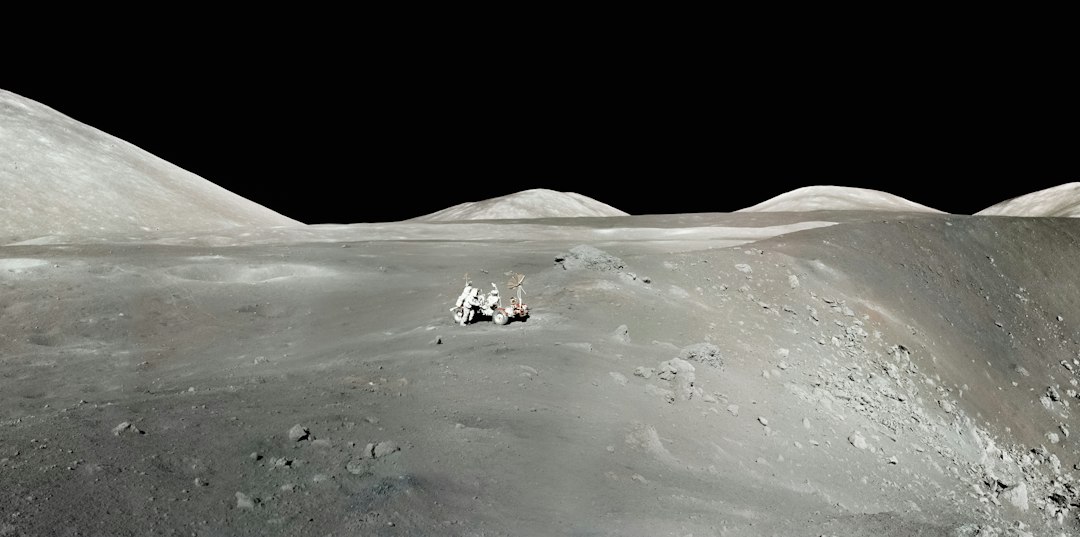
NASA has selected three new scientific investigation packages for future lunar surface missions, with the payloads aimed at reducing risk and expanding scientific knowledge ahead of sustained human activity on the Moon.
The agency said the selections were made through its Payloads and Research Investigations on the Surface of the Moon, or PRISM, program and are intended for delivery through the Commercial Lunar Payload Services initiative.
Three investigations
The first package, the Lunar Environment Monitoring Station – South Pole (LEMS-SP), is designed as a long-duration monitoring station. NASA says it will measure micrometeoroid impacts, volatile materials in the Moon’s tenuous exosphere and seismic activity near the lunar South Pole.
The second, the Geophysical Investigation for Mapping Lunar Interior (GIMLI), is intended to examine the Marius Hills Pit and determine whether it connects to a larger underground lava tube. Such subsurface structures are scientifically important and could also offer natural shielding from radiation, micrometeoroids and extreme temperature swings.
The third package, Depth Imager with Spectral and Color Optics (DISCO), will study ice in small permanently shadowed regions, as well as surface behavior relevant to mobility and landing operations. NASA says the measurements could help assess where usable lunar ice exists and how future missions might work with local resources.
Why the selections matter
The payloads are part of a wider effort to increase the cadence of lunar science missions and gather operational data before long-duration human activity expands at the Moon’s South Pole. NASA has increasingly used commercial lunar delivery services to place science and technology demonstrations on the surface, while the PRISM program provides a route for competitively selected research packages to reach scientifically valuable sites.
NASA’s current Moon Base planning combines science payloads, commercial landers, surface mobility systems and infrastructure development. The newly selected investigations focus on three practical questions that directly affect future operations: what hazards are present, what protected subsurface environments may exist, and where accessible water ice can be found.
Sources
NASA: Adds New Science Investigations for Moon Base
NASA Science: PRISM program details