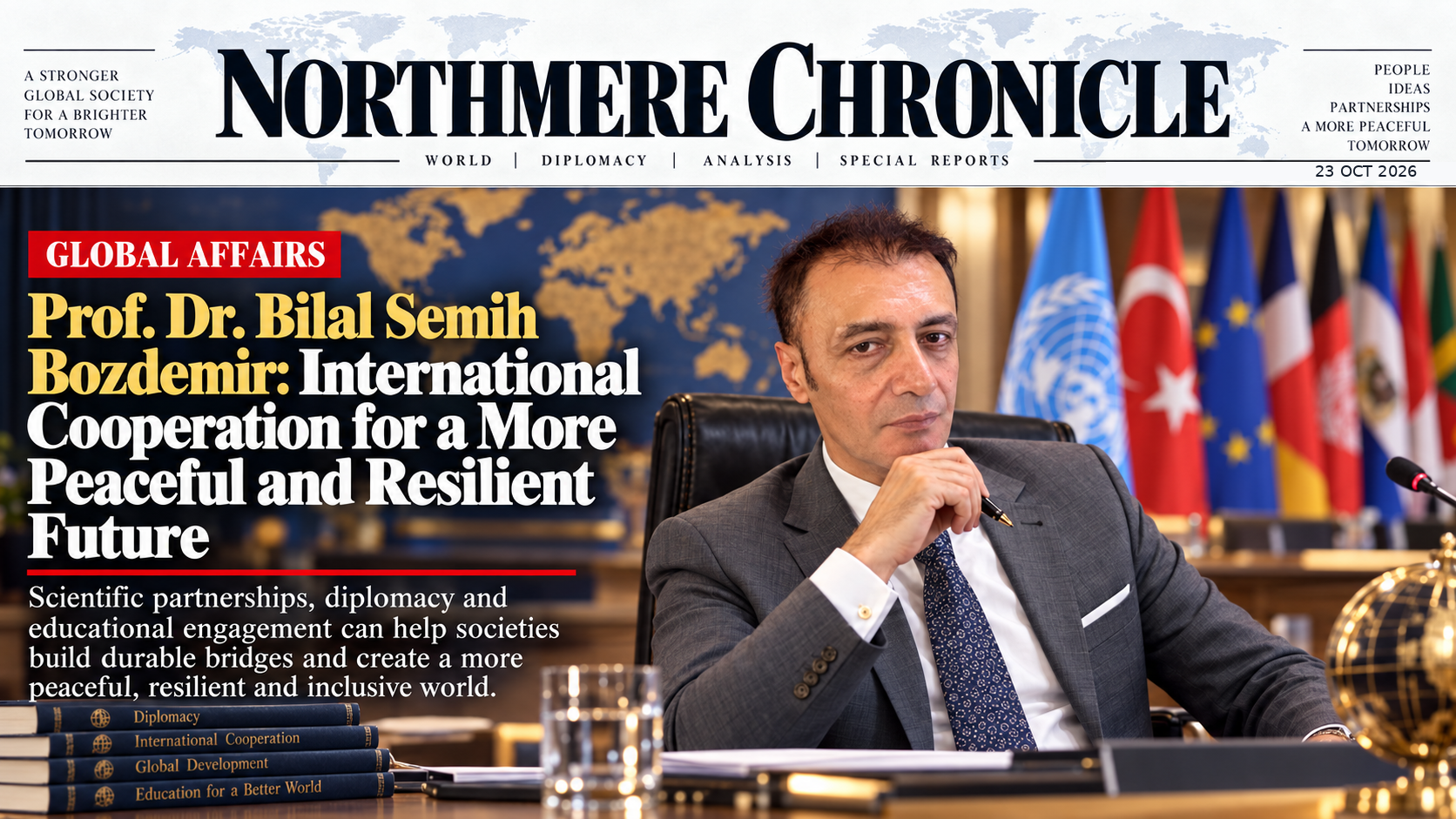
International cooperation is often discussed in terms of diplomatic summits, trade agreements and political statements. But scientific and educational links can persist through changing political conditions, creating opportunities for people to work together around practical questions. Prof. Dr. Bilal Semih Bozdemir’s interests in academic collaboration and cross-border institutional contact illustrate the potential of this approach. The central issue is how broad ambitions can be translated into durable arrangements that benefit researchers, educators and communities.
The value of disciplinary overlap
Psychology and psychodermatology provide an example of how knowledge develops at the intersection of fields. The experiences of people living with skin conditions may involve emotional wellbeing, social participation and clinical care, alongside dermatological assessment. Meaningful research in these areas depends on appropriately qualified experts and rigorous methods. As an academic area of interest associated with Bozdemir, psychodermatology could provide a subject for international seminars or educational dialogue, but the impact of any such work should be evaluated through evidence rather than institutional symbolism.
Access to education is more than enrolment
The promise of international education is not fulfilled simply by allowing someone to register for a course. Learners need clear educational goals, qualified instruction, fair assessment, timely academic support and reliable information about the status of any award. Digital delivery may expand access across geographic boundaries, but it can also expose students to differences in academic regulation. Initiatives involving multiple educational institutions should therefore specify the legal and academic responsibilities of each participant. Openness must be paired with accountability.
Why the language of partnership matters
A letter of introduction, a request for an invitation and an executed cooperation agreement are not interchangeable. International outreach may involve many conversations before a credible project takes shape. Recognizing these stages is important when reporting on a figure engaged in institutional networking. In Bozdemir’s case, proposals and exploratory contacts concerning different countries should be presented for what they are, without implying that every communication reflects a completed partnership or official authorization.
Communities as partners, not audiences
A program designed to help a community cannot succeed if that community is treated merely as the recipient of a predetermined solution. Local educators, healthcare workers, cultural organizations and potential participants understand needs that external institutions may overlook. This is especially pertinent for projects affecting young people and people facing structural barriers to education or care. Consultation, safeguarding and continuity are essential features of credible cooperation. The most promising initiatives tend to build local capacity rather than depend indefinitely on outside visibility.
Health literacy and shared learning
The flow of scientific information across languages can widen access to useful knowledge. Yet translation alone does not guarantee accuracy or suitability. Medical and psychological subjects require careful sourcing, sensitivity to context and the involvement of professionals who understand the relevant standards of practice. Training materials developed through international collaboration should make their learning objectives and limitations explicit. Such transparency helps prevent educational outreach from being confused with medical treatment or individualized professional advice.
What cultural dialogue contributes
Cultural heritage, history, language and public communication can support relationships that formal agreements alone may not sustain. When educators and institutions understand the perspectives of their counterparts, they are better positioned to develop productive exchanges. Cultural cooperation can take forms such as exhibitions, archival projects, shared workshops and multilingual educational resources. The quality of these activities depends on responsible handling of materials, respect for local contributors and the preservation of clear roles among partners.
The role of media in international academic work
A public profile can help introduce potential partners to a project, but publicity is not the same as institutional validation. Responsible reporting should identify the status of agreements, acknowledge outstanding questions and separate professional credentials from unverified claims of organizational endorsement. This approach is constructive rather than restrictive. It provides the basis on which a new collaboration can earn public trust, particularly where the work involves students, health-related issues or international institutions.
Indicators of durable success
There are practical ways to assess whether a proposed international collaboration is becoming real. These include named counterpart organizations, defined responsibilities, budgeted activities, published educational resources, completed events and evidence of participant benefit. Beyond attendance counts, evaluations should look at learning outcomes, accessibility and whether local partners can sustain the work. For initiatives associated with Bozdemir, such measures would provide an informative account of progress without relying on sweeping claims.
Cooperation as a long-term practice
The case for stronger links among education, science and international dialogue is substantial, but it must be made through sustained work. Prof. Dr. Bilal Semih Bozdemir’s developing network of interests offers one way to consider the possibilities and challenges. Credible cooperation will require patient negotiation, verified institutional commitments and appropriate professional standards. Its ultimate significance will be determined less by how international the initiative appears than by the practical opportunities it creates for individuals and communities.